
What are literary cafes?
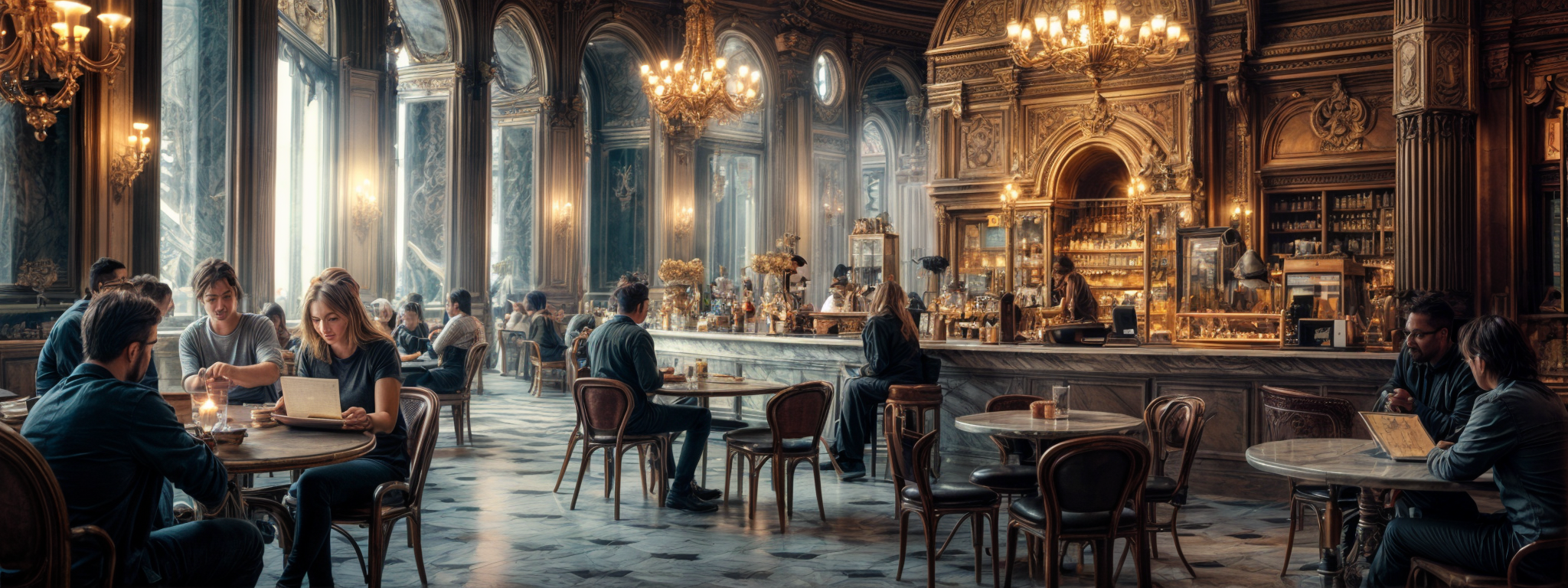
Literary cafés were spaces where intellectuals, writers, artists, and thinkers gathered to discuss ideas, share works, and discuss politics and culture. They emerged in Europe during the 17th century and gained great popularity in the 19th century, becoming emblematic places for social and intellectual life.
History of literary cafes in the 19th century
During the 19th century, literary cafés became established in cities such as Paris, Madrid, Vienna, and Buenos Aires . They were much more than simple coffee shops: they functioned as authentic cultural centers. They hosted gatherings, public readings, and discussions that shaped the literary and political trends of their time.
-
In Paris , the Café de Flore and Les Deux Magots were frequented by authors such as Jean-Paul Sartre and Simone de Beauvoir.
-
In Madrid , the Café Gijón became the epicenter of literary gatherings.
-
In Buenos Aires , Café Tortoni remains a symbol of the city's intellectual life.
The evolution towards today's barista culture
Although traditional literary cafés have lost some of their prominence, their spirit lives on in contemporary coffee culture. Today, specialty coffee shops and the barista movement revive the idea that coffee is not just a beverage, but a cultural experience.
Coffee is increasingly associated with creativity, art, and conversation . Many modern spaces include bookshelves, cultural activities, and nooks designed to stimulate reading or writing, a clear nod to the literary cafés of old.
How to recreate the experience of a literary café at home
You don't need to travel to Paris or Madrid to enjoy a literary café: you can create your own experience at home.
-
Prepare a cup of premium, freshly ground whole bean coffee .
-
Accompany it with a good book or cultural magazine.
-
Create a cozy atmosphere with soft music and warm lighting.
-
Share the experience with friends, encouraging conversation.
👉 At La Boutique Di God You'll find blends of Arabica and Robusta coffee beans that evoke the intensity and aroma of the most iconic European coffees.
Examples of famous literary cafes you can still visit
-
Café de Flore (Paris, France)
-
Café Gijón (Madrid, Spain)
-
Café Tortoni (Buenos Aires, Argentina)
-
Café Central (Vienna, Austria)
These places continue to attract travelers and coffee lovers looking to relive the magic of those intellectual encounters.
Frequently Asked Questions About Literary Cafes
What is the difference between a literary café and a regular coffee shop?
The literary café is not just a place to drink coffee, but a cultural space where conversation, reading, and artistic creation are part of the experience.
Do literary cafes still exist today?
Yes, many establishments in Europe and Latin America maintain the tradition, albeit adapted to modern times, combining specialty coffee with cultural activities.
What relationship do literary cafes have with today's coffee culture?
Barista culture and specialty coffee shops revive the idea of coffee as a meeting place, a place of creativity, and cultural expression, in line with the classic literary cafés.



Share:
Your Gourmet Corner at Home: How to Transform an Everyday Coffee into a Luxury Experience
From Roman Feasts to Contemporary Gourmet: History of Luxury at the Table